You can build a strong student portfolio without paid work experience by presenting academic projects, volunteer contributions, extracurricular activities, and personal work as proof of your skills. Your portfolio should show what you worked on, how you handled it, what you produced, and what you learned.
A portfolio is different from a résumé because it lets someone examine your actual work instead of reading a list of qualifications. You probably have useful material already, but it may be sitting in course folders, club documents, presentation slides, or personal accounts. By selecting relevant samples and explaining them well, you can create a portfolio that supports internship, job, and freelance applications.
Why A Student Portfolio Matters Before You Have Paid Experience
A résumé tells an employer about your education, skills, and activities. A portfolio provides the evidence behind those claims. If your résumé says you can write, analyze data, design presentations, organize events, or work with a team, your portfolio can show a finished sample connected to that ability.
This proof gives you useful material for applications and interviews. Instead of making a broad claim about your communication skills, you can discuss a research paper, presentation, campaign plan, or club project that required them. A portfolio can also help an interviewer ask more specific questions, giving you a chance to explain your decisions and contributions.
You don’t need to wait until a company hires you. Paid work is only one source of experience, and students build relevant abilities in classrooms, campus groups, volunteer roles, sports, creative activities, and independent study. Your goal is to connect those experiences to the type of opportunity you want.
What Counts As Portfolio Experience?
Portfolio experience includes any relevant project that demonstrates how you think, communicate, create, organize, solve problems, or learn. Class assignments, research papers, laboratory reports, presentations, group projects, and design work can all qualify. The strongest choices have a clear purpose and give you enough material to explain your process.
Extracurricular activities can produce useful work samples too. A club event plan can show organization and teamwork, a student publication can demonstrate editing or writing, and student government materials can show planning and communication. Volunteer roles may produce schedules, outreach materials, training documents, social media posts, or project summaries.
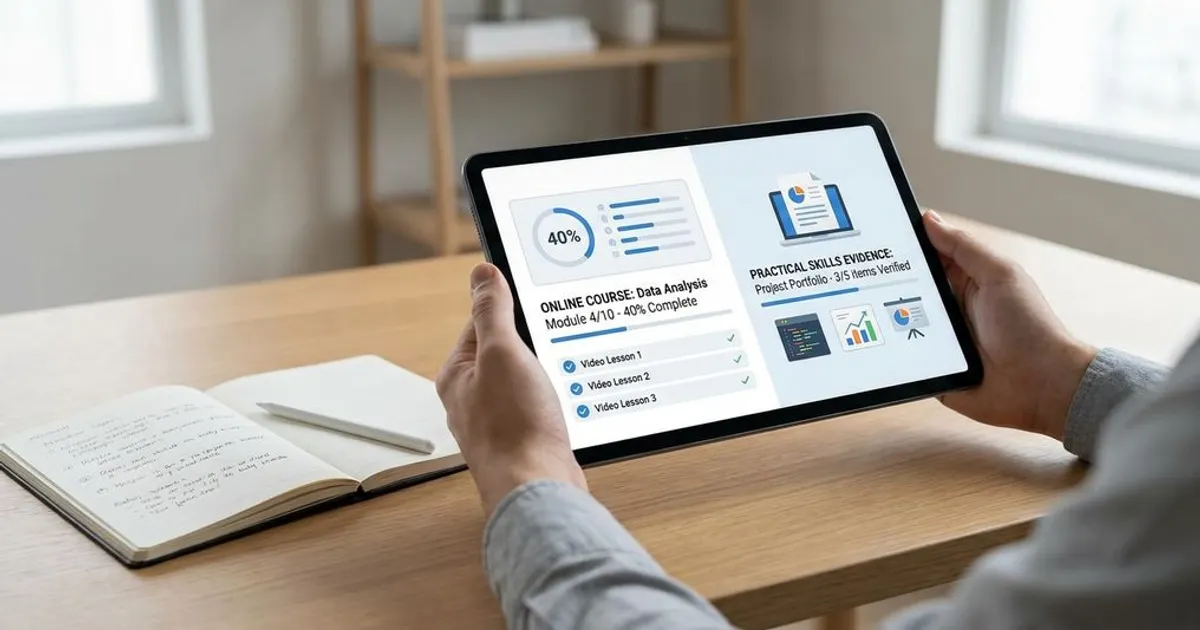
Personal work also counts when it connects to the skills you want to demonstrate. You can include a coding project, design mockup, photography collection, writing sample, data analysis, tutorial, or completed online course project. Label personal and mock work accurately so the reader understands that it was self-directed rather than created for a paying client.
How To Turn A Class Assignment Into A Professional Portfolio Piece
Start by removing anything that makes the assignment look like an unedited classroom submission. Delete grading notes, course login information, student identification numbers, and unnecessary instructions. Correct spelling and formatting problems, then give the piece a descriptive title that tells the reader what it demonstrates.
Present the assignment as a short case study using four parts: problem, action, result or reflection, and skills. Explain the goal of the assignment, your specific responsibilities, the steps you completed, and the final output. If the project did not produce a measurable result, describe what you learned, what improved, or what you would change.
Group assignments require extra care. State which parts you completed and credit your teammates rather than presenting the full project as individual work. Ask your professor or group members for permission when the material contains unpublished research, shared creative work, private information, or content owned by another person.
Free Platforms And Formats For Your Student Portfolio
Your portfolio does not need a custom domain or advanced web design. Notion offers student portfolio templates and lets you publish pages online. Behance suits visual work, and GitHub Pages can host coding, data, documentation, and technical projects directly from a GitHub repository.
A Portable Document Format (PDF) portfolio is another practical choice. It works well for writing, research, business, education, and presentation samples that fit into a document. Keep the file easy to scan, add a linked contents page when it becomes long, and use a filename that includes your name and the word “portfolio.”
Choose the format that makes your work easiest to review. A visual designer may need large images, a writer needs readable text, and a developer needs project documentation and access to code. Test every link, file, video, and navigation button on a phone and computer before sending the portfolio to anyone.
How To Write An About Page Without Job Titles
Your About page should explain what you study, what you can do, and which opportunities you are seeking. You don’t need to call yourself an expert or create a job title you haven’t earned. Use direct language that connects your education and interests to specific abilities.
A useful introduction can follow a simple order: your field of study, your strongest areas, the work represented in the portfolio, and your current goal. You could identify yourself as a student interested in data analysis, visual communication, community programs, software development, research, or another defined area. Keep the description short enough to read without scrolling through a long personal history.
Add professional contact information and a current résumé. Use an email address suitable for applications, and avoid publishing a home address, student identification number, personal schedule, or private phone number unless you have a reason to share it. A professional networking profile can provide another contact route, but confirm that its details match your résumé and portfolio.
Which Skills Should You Highlight Without Work History?
Choose skills that appear in the opportunities you plan to pursue, then connect every skill to visible evidence. The National Association of Colleges and Employers identifies career readiness areas that include career and self-development, communication, critical thinking, leadership, professionalism, teamwork, and technology. These categories can help you recognize abilities developed through coursework and student activities.
A research paper can demonstrate written communication, source evaluation, and critical thinking. A group presentation can show collaboration, planning, and public communication. A club project may demonstrate leadership, organization, dependability, and the use of digital tools.
Avoid adding long lists of skills without supporting material. If you list spreadsheet analysis, include a suitable spreadsheet, chart, dashboard, or project description when permission allows. If you list project coordination, show a timeline, task plan, event document, or reflection that explains what you managed.
How Should You Choose And Organize Your Work Samples?
There is no fixed number of pieces that every student needs. Begin with a small collection of work you can explain confidently, then add stronger material as you complete it. A focused portfolio is easier to review than a crowded site filled with unrelated assignments.
Compare every potential sample with the opportunity you want. Keep pieces that demonstrate requested skills, relevant tools, useful subject knowledge, or strong communication. Remove repetitive work, unfinished files, weak early drafts, and assignments that require a long explanation before the reader can understand their value.
Organize the selected pieces by skill, project type, or career area. Use simple labels: Writing, Research, Design, Technical Projects, Leadership, or Community Work. Place your strongest and most relevant material near the beginning rather than relying on the reader to search for it.
Common Student Portfolio Mistakes And How To Avoid Them
One common mistake is uploading a file without explaining it. A presentation or report may make sense to your professor, but a recruiter does not know the original assignment. Add a short description covering the goal, your role, the tools used, the final output, and the skills demonstrated.
Another mistake is treating visual decoration as a substitute for organization. Elaborate colors and animations cannot fix confusing navigation, tiny text, broken links, or missing project descriptions. Use consistent headings, readable fonts, working buttons, and enough spacing to guide the reader through your work.
Privacy and ownership also matter. Remove confidential details, private data, comments from instructors, and information about classmates or volunteer participants. Use redacted material or mock data when appropriate, and never publish group work as if you created every part yourself.
Student Portfolio Checklist: What To Build First
Begin by gathering possible samples from your courses, volunteer work, clubs, creative activities, and personal projects. Review the requirements in the internships or jobs that interest you, then select work that matches those needs. You don’t have to publish every successful assignment.
Create a simple home page with your name, field of study, main skills, and career goal. Add an About page, contact details, résumé, and your selected project pages. Give every project a clear title, a short case study, and an accessible file, image, video, or link.
If you have no suitable projects, create one focused piece rather than leaving your portfolio empty. Choose a task related to your target role, complete it with realistic requirements, and label it as a personal or mock project. Document your decisions and revisions so the piece shows your working process as well as the finished result.
What Should A Student Put In A Portfolio With Little Work Experience?
- Add class projects and strong assignments.
- Include volunteer, club, and personal work.
- Explain the goal, your role, the result, and skills.
- Add a short bio and contact details.
- Publish with a free portfolio tool.
Build Proof Before You Build A Long Work History
Your first portfolio does not need to look like the portfolio of someone who has worked for years. It needs to show relevant skills, careful presentation, honest descriptions, and work you can discuss with confidence. Start with your best academic, volunteer, extracurricular, or personal project, turn it into a short case study, and publish it in a format that is easy to review. Keep improving your student portfolio as your abilities and goals change. Paid experience can strengthen it later, but you already have enough material to begin building proof of what you can do.