You stay ahead academically and professionally when you build emerging tech skills that employers prioritize and universities now expect. These skills position you as a problem-solver who can adapt quickly and contribute value from day one.
You now operate in an environment where technology shapes every field—from marketing to engineering to healthcare—so gaining emerging tech skills offers you a clear competitive edge. This article walks you through the most relevant skills students use to differentiate themselves in internships, research roles, and early-career opportunities. You’ll see how each skill works, where it applies, and how you can master it without overwhelming your schedule.
Skill 1: Artificial Intelligence Literacy
AI literacy helps you understand how AI tools operate, how to prompt effectively, and how to evaluate AI-generated outputs. You use this skill to speed up research, strengthen creative projects, and streamline repetitive academic tasks.
Students now integrate AI into daily work through summarization tools, coding assistants, and automated data organization. When you understand how these systems generate responses, you produce cleaner work and avoid errors that come from blind automation. Recruiters also look for students who know how to leverage AI responsibly and align their workflow with the tools used by modern teams.
When you build AI literacy early, you stand out in classrooms and interviews because you solve problems faster and operate with stronger judgment. This prepares you for project-based learning, capstone work, and cross-disciplinary collaboration where AI is becoming a central tool.
Skill 2: Data Analytics Fundamentals
Data analytics helps you interpret information, spot patterns, and make data-supported decisions. You rely on this skill in nearly every academic discipline—from business case studies to health research to environmental modeling.
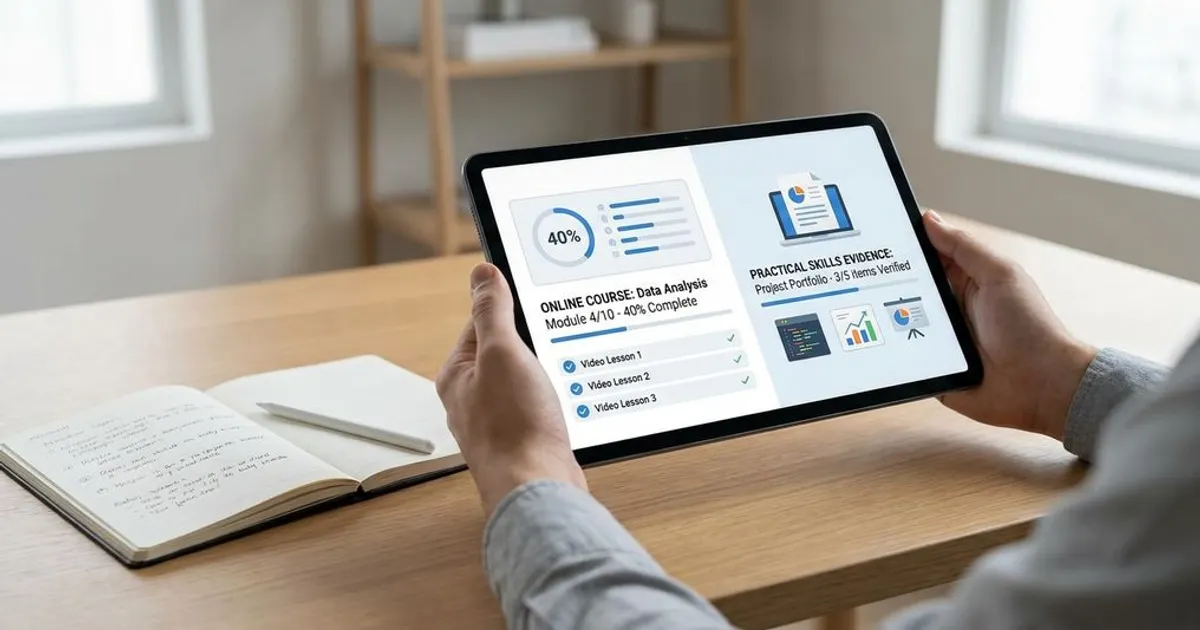
Modern coursework frequently involves dashboards, datasets, and visualizations. Students who know how to clean, analyze, and present information position themselves as strategic thinkers who understand both the numbers and the story behind them. Universities now integrate analytics tools like SQL environments, spreadsheets, and BI dashboards into student assignments.
Building early familiarity with data helps you handle larger academic demands later, including research projects, internships, and team-driven coursework. It also signals to employers that you understand how organizations evaluate performance and make decisions.
Skill 3: Cybersecurity Awareness
Cybersecurity awareness teaches you how to protect information, recognize digital threats, and maintain responsible online behavior. You apply this skill in both academic settings and collaborative digital environments, where sensitive data often moves between systems.
Students face rising exposure to phishing, credential theft, and cloud vulnerabilities. When you learn how to manage passwords, authenticate devices, and handle files correctly, you reduce risks for your institution and for yourself. Employers value students who understand this area because security gaps often arise from human error.
By developing cybersecurity habits early, you demonstrate maturity, reliability, and professionalism—qualities that carry weight in technical and non-technical roles.
Skill 4: Cloud Computing Basics
Cloud computing skills show that you understand how modern organizations store information, deploy software, and collaborate across distributed systems. You use cloud platforms throughout your academic journey, often without realizing how they work.
Class projects, research tools, and online labs increasingly run on cloud architecture. Students who recognize how storage, permissions, and shared environments operate make fewer mistakes during group work and navigate technical systems with more confidence. Introductory familiarity with platforms like AWS Academy or Google Cloud educational tools strengthens your professional readiness.
Cloud skills also give you an edge when applying for internships in IT, software, data science, and digital operations—fields where cloud knowledge has become a standard expectation.
Skill 5: UX/UI Thinking
UX/UI thinking helps you evaluate how people interact with digital products and design intuitive experiences. You use this skill when developing prototypes, building apps for class assignments, or improving communication for group projects.
Students with UX/UI awareness build cleaner presentations, stronger app layouts, and more user-friendly designs. This mindset also strengthens collaboration because you learn to see projects through the eyes of the end user. Recruiters consider UX/UI awareness valuable not only in design roles but also in marketing, product development, and engineering.
Building this skill positions you as someone who cares about clarity, accessibility, and ease of use—traits that lead to stronger outcomes in academic and professional settings.
Skill 6: Automation and No-Code Tools
Automation and no-code tools allow you to complete tasks quickly without advanced programming knowledge. You apply these tools to optimize study routines, streamline workflows, and produce higher-quality work in less time.
Students now rely on automation for note-taking, scheduling, and project management. No-code platforms help you build apps, design systems, and generate content faster. This reduces the effort required for repetitive tasks and allows you to focus on strategic thinking.
When employers see students who understand automation, they see future team members who improve efficiency, reduce manual errors, and adapt to new tools without friction.
Skill 7: Digital Communication Mastery
Digital communication mastery ensures that you can deliver ideas clearly across multiple platforms—from email to collaborative tools to video communication. You use this skill constantly in group projects, internships, and professional outreach.
Students who write concise messages, manage tone properly, and handle asynchronous communication stand out immediately. Digital communication now determines your first impression in almost every academic and professional interaction.
Strengthening this skill helps you lead teams effectively, resolve conflicts quickly, and present yourself as a prepared, organized contributor.
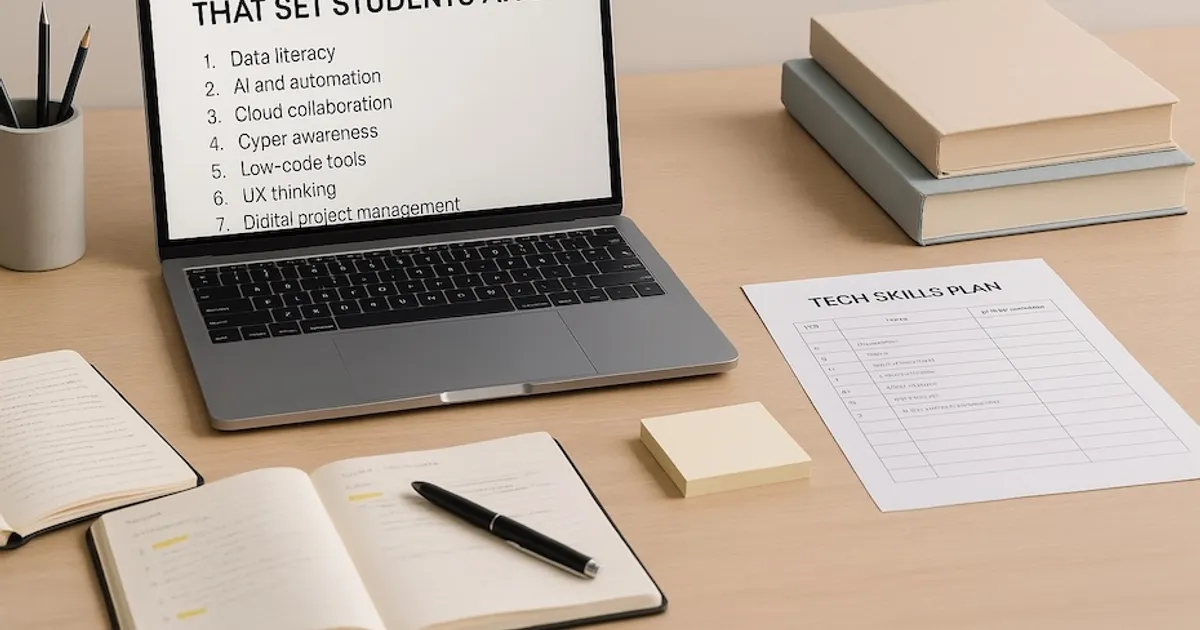
Top Student Tech Skills
- AI literacy
- Data analytics
- Cybersecurity basics
- Cloud computing
- UX/UI thinking
- Automation tools
- Digital communication
Raise Your Advantage with Intentional Skill Building
You rise faster as a student when you commit to learning emerging tech skills that strengthen your confidence and expand your opportunities. These seven areas prepare you for modern classrooms, interdisciplinary teamwork, and competitive hiring environments. When you invest in skills that employers value and professors recognize, you position yourself for stronger performance and long-term career growth. Your next step is to choose one skill, commit to consistent practice, and build momentum that shapes your future.