You strengthen financial control when you automate budget oversight through modern real estate budgeting software, giving yourself a clearer view of spending, forecasts, and performance across your properties. This shift reduces manual effort, removes spreadsheet errors, and equips you to act faster. You gain accuracy, speed, and strategic clarity that improves portfolio decisions.
What Is Real Estate Budgeting Software and Why Does It Matter?
Real estate budgeting software gives you a centralized system for managing expenses, forecasts, and financial reporting. You remove the confusion created by multiple spreadsheets and instead rely on automated updates that reflect every financial change. This increases consistency and gives you clean data at all times.
You work more efficiently because software eliminates hours of manual entry, reconciliation, and formula checks. Each update flows through the system automatically, allowing you to focus on evaluating results rather than correcting errors. Your oversight becomes more organized, and your financial workflow stays controlled.
This matters because your budgets shift constantly as maintenance spending rises, invoices arrive, and revenue adjusts. Without automation, you track these changes manually and risk missing important signals. With software, you stay ahead of financial movement and maintain tighter control over property performance.
What Trends Are Shaping Real Estate Budgeting Software in 2026?
One of the strongest trends is predictive automation, where forecasting tools analyze historical patterns and help you anticipate cash flow movement. You receive early alerts when spending begins to drift, and you gain clearer expectations for future costs. This gives you time to intervene rather than react at the end of the quarter.
Another trend is the connection between budgeting software and other operational tools in your portfolio. Integrations bring together accounting, maintenance systems, and vendor billing platforms so your numbers update instantly without manual steps. You remove duplication and maintain accurate data across your entire workflow.
Cloud collaboration also continues to strengthen team communication. You allow property managers, analysts, and bookkeepers to access the same data set from any location, reducing email back-and-forth and speeding up approvals. Your team stays aligned, and your financial processes move with fewer delays.
How Does Automated Budget Oversight Improve Control?
Automation improves cash flow clarity because your numbers adjust in real time as expenses hit your system. Instead of waiting for reports to be prepared at month-end, you see your financial position daily. You react earlier, negotiate more effectively, and manage liquidity with greater confidence.
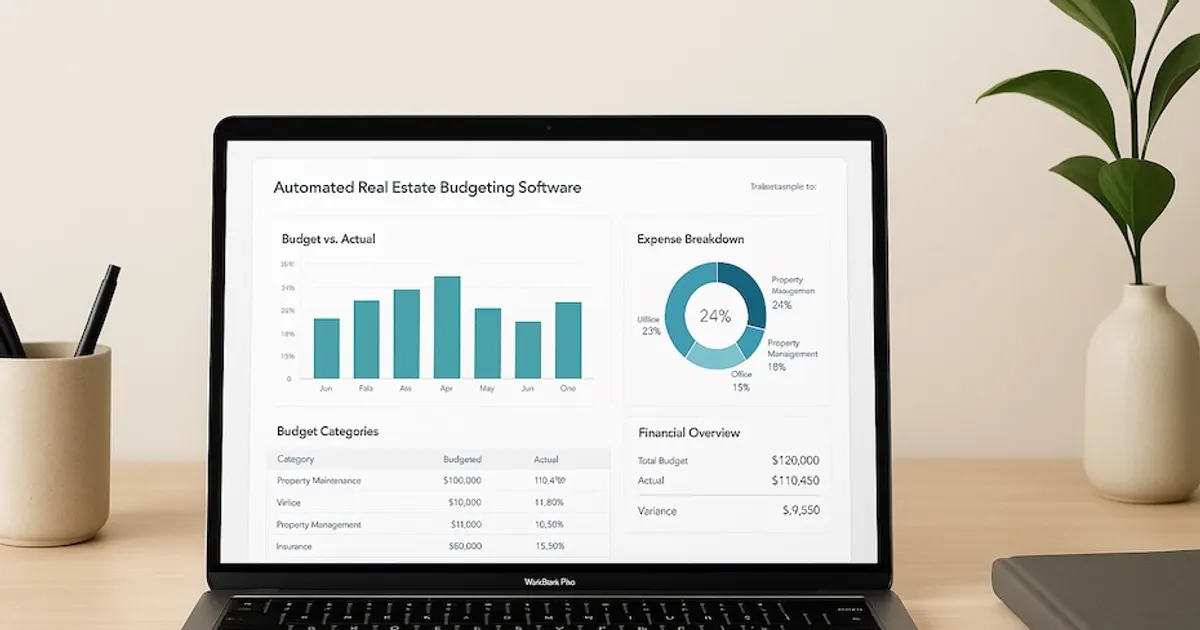
You also strengthen reporting because automated tools generate clean statements instantly. You no longer spend hours formatting spreadsheets; you produce accurate actuals vs. budget reports with a few clicks. Consistent reporting improves communication with owners, lenders, and internal leaders.
Error reduction is another major advantage. Manual spreadsheets create risk because formulas can break or data can be copied incorrectly. Automation applies validated calculations every time, ensuring your budget, forecast, and variance results remain accurate.
What Should You Look for When Choosing Budgeting Software?
Ease of use matters because your team must adopt the system quickly and confidently. A complicated interface slows down adoption and increases the likelihood of incorrect entries. When the platform is simple to navigate, your entire budget cycle moves faster.
Integration capabilities influence how much manual work you can eliminate. Strong integrations reduce administrative tasks by pulling in rent postings, work orders, and invoices automatically. You maintain alignment between your operational tools and your financial dashboard.
Scalability is equally important because your portfolio may expand. You avoid future migration challenges by choosing a system that can support more properties, more users, and more automation without slowing down.
How Do You Implement Budget Automation Successfully?
Start by clarifying your current workflow and identifying where data moves slowly or becomes inconsistent. Understanding your process helps you configure the software correctly, and you assign system roles based on actual responsibilities rather than assumptions. This prevents confusion once the platform goes live.
Next, you standardize expense categories because inconsistent naming leads to unreliable reporting. With consistent categories, your team categorizes expenses accurately, and your portfolio-wide comparisons become clean and useful. This strengthens your ability to compare performance across properties.
Training is key once the software is ready. Every team member must understand their permissions, responsibilities, and how to use the tools. When adoption is strong, automation delivers its full value, and your reporting continues smoothly throughout the year.
How Are Real-World Property Managers Benefiting?
Property managers using automated budgeting software report faster variance detection because the system highlights issues as they develop. You gain visibility into spending patterns and catch irregularities before they escalate. This protects operating margins and improves forecasting accuracy.
Teams also see major reductions in administrative workload. Invoices flow through the system automatically, reports generate instantly, and manual reconciliation shrinks significantly. You shift your time toward analysis rather than clerical work.
Accuracy improves across the board, which enhances communication with owners and investors. When your data is reliable and consistent, you deliver clearer updates and stronger recommendations. This increases trust in your financial leadership and strengthens long-term relationships.
Core Features of Real Estate Budgeting Software
- Real-time budget tracking
- Faster reporting and alerts
- Clean financial data
- Automated forecasting
- Portfolio-wide visibility
Lead Your Budgeting with Confidence
Automated budgeting tools help you move from reactive oversight to proactive financial control. By relying on real-time data, integrated workflows, and accurate forecasting, you improve cost management and strengthen decision-making across your entire property portfolio. This shift positions you to scale operations, respond faster to financial trends, and maintain a clear view of performance at every stage.