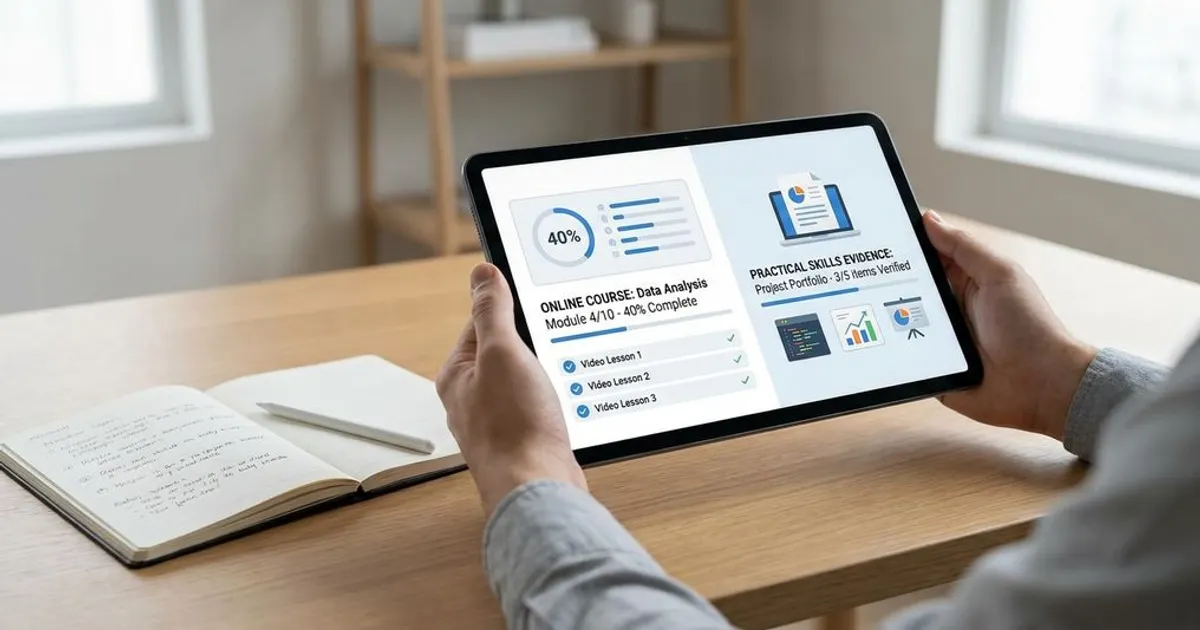
If you want to learn business in 2026, the strongest path is not a single book, one premium course, or a random playlist. You get better results when you combine timeless business books, structured online courses, and free practical resources that push you to apply what you learn.
You need material that teaches how businesses create value, how they win customers, how they manage money, and how they make decisions under pressure. This guide gives you that mix in a clear order, so you can build business knowledge from scratch, sharpen execution, and move from passive learning to real-world action.
What Are The Best Books To Learn Business From Scratch In 2026?
If you are starting with no formal business education, books still give you one of the fastest ways to build mental models. A good business book helps you understand how value creation, marketing, sales, finance, operations, and management fit together, which matters more than memorizing isolated tips.
The best beginner business books still do four jobs well: they teach fundamentals, they sharpen judgment, they explain how companies grow, and they show you how leaders make choices with limited time and resources. When a title keeps showing up in founder circles, management reading lists, and self-directed study plans year after year, that usually signals lasting usefulness rather than hype.
The Personal MBA remains one of the most practical starting points because it gives you a broad business education without forcing you into academic jargon. If you want one book that can introduce you to pricing, systems, productivity, marketing, negotiation, and decision-making in plain language, this is still one of the safest places to begin. It works well when you want range before specialization.
The Lean Startup belongs on your shelf if your goal is to launch, validate, and improve a business idea. It teaches you to test demand early, reduce waste, and treat learning as part of execution. That matters when you are building something new and cannot afford long planning cycles built on assumptions.
Good to Great still matters if you want to understand disciplined execution, leadership quality, and why some companies sustain performance over time. You may not agree with every interpretation or every business example, yet the book still pushes you to think harder about focus, team quality, and operating discipline. Those are useful habits whether you run a startup, a local company, or a larger organization.
A Drucker collection, including Classic Drucker, adds a different kind of value. Peter Drucker’s work helps you think like a manager instead of a content consumer. You learn to ask better questions about priorities, resource allocation, productivity, and what a business is actually designed to accomplish.
If you want a reading stack that covers the full span of business learning, start with one generalist title, one entrepreneurship title, one strategy title, and one management title. That creates balance. You avoid becoming the person who understands startup buzzwords but cannot read a business model, or the person who loves theory but cannot sell, price, or execute.
A useful reading order is simple. Start with The Personal MBA to learn the language of business. Move to The Lean Startup if you want to build something, then read Good to Great for strategic thinking, and finish with Drucker to sharpen judgment. Read actively, take notes, and connect each idea to a real company you can observe.
Books still matter because they slow you down just enough to build durable understanding. Online content often teaches tactics without structure. A strong book gives you structure first, which makes every course, community, and business case easier to understand later.
Which Online Business Courses Are Actually Worth Taking In 2026?
The best online business courses are the ones tied to a clear outcome. You should know whether you are learning business fundamentals, entrepreneurship, digital marketing, operations, analytics, leadership, or small-business execution before you enroll. If the goal is vague, the course usually becomes entertainment instead of education.
Coursera still stands out because it gives you access to a wide business catalog with different depth levels. You can find foundational courses, university-backed programs, guided projects, and certificate options in one place. That flexibility matters when you want structured learning without committing to a full business degree.
If you learn best through a more academic route, Massachusetts Institute of Technology OpenCourseWare gives you access to entrepreneurship materials that are serious, demanding, and free. You are not getting lightweight content dressed up as training. You are getting material that pushes you to think about business formation, innovation, and business building with sharper discipline.
The United States Small Business Administration Learning Platform earns a place on any serious list because it focuses on practical business building. You can use it to study how to start a business, plan operations, understand growth topics, and move through owner education in a way that feels grounded in actual business needs rather than pure theory.
SCORE is especially useful when you do not just want a course, but also accountability and guidance. Its learning options, webinars, and mentoring ecosystem make it easier to turn information into action. Many learners do not fail because the content is bad. They fail because no one is pushing them to make decisions, refine plans, and keep moving.
For specialized skills, Google Skillshop and Grow with Google fill an important gap. Business learning is no longer limited to management principles and startup theory. You also need working knowledge of online advertising, search visibility, customer acquisition, analytics, and modern productivity tools, including artificial intelligence workflows used by small businesses.
The smartest way to choose a course is by use case. If you want broad exposure, choose Coursera. If you want free academic rigor, use Massachusetts Institute of Technology OpenCourseWare. If you want practical small-business education, use the United States Small Business Administration and SCORE. If you want channel-specific marketing knowledge, use Google Skillshop. If you want to understand how small businesses are using artificial intelligence to save time and improve processes, use Grow with Google.
You also need to watch for a common trap: collecting certificates without building capability. A certificate can support your credibility, but only if the learning shows up in your decisions, your work output, your analysis, and your ability to solve business problems. If you finish a course and cannot explain revenue drivers, customer segments, cost structure, or distribution choices in plain language, more course hours will not fix the problem. Application will.
Good courses save you time by organizing information in the right order. Great courses also push you to make judgments. That is the real benchmark. You are not looking for maximum content. You are looking for content that changes how you think and what you can do.
Can You Learn Business For Free, And Where Should You Start?
You can learn a great deal of business for free if you use the right combination of sources. Free does not mean shallow anymore. Some of the best material available to business learners now comes from open courseware, government-backed small-business education, platform-native training, and practitioner communities.
The best free starting point depends on what kind of learner you are. If you want structure and intellectual depth, begin with Massachusetts Institute of Technology OpenCourseWare or free-audit options on Coursera. If you want practical instruction tied to starting or running a company, begin with the United States Small Business Administration Learning Platform and SCORE. If you want current operator conversations, use selected business communities and forums to supplement your formal study.
A strong free stack usually has three layers. You need one source for theory, one source for execution, and one source for feedback. Theory teaches you how business works. Execution teaches you what to do. Feedback helps you test whether your understanding survives contact with real conditions.
The United States Small Business Administration is especially valuable if you are based in the United States or building something that resembles a practical small business. The material stays close to planning, launching, funding, and growing a company. That is useful when you want to move beyond broad motivation and into operating reality.
SCORE strengthens that free path because it brings education and mentorship together. Templates, webinars, and advisor access can shorten your learning curve. Many business learners spend months searching for the perfect resource when the real bottleneck is that they have not made a concrete decision yet.
Free learning works best when you stop treating education like endless browsing. Pick a real business, either your own idea, an employer, a freelance service, a family business, or a company you admire. Then map what you learn onto that business. Identify the customer, the offer, the pricing, the distribution channel, the cost structure, and the growth constraints. That single habit turns free content into working business knowledge.
You should also be selective. Free content on the open internet can become noise quickly. If the source does not help you make better business decisions, reduce it. If the material is all inspiration and no mechanics, reduce it. If you cannot connect the lesson to revenue, operations, customers, margins, or management, move on.
The strongest free learning path usually beats a scattered paid one. Free official resources often carry less hype, more signal, and better operational usefulness than expensive creator-led courses built around personality. When your goal is real business capability, usefulness matters more than packaging.
What’s The Best Way To Learn Business If You Want To Start A Company, Not Get A Master Of Business Administration?
If your goal is to start a company, you do not need to study business the way a degree program packages it. You need to learn enough to make sound decisions, avoid predictable mistakes, and build traction. That requires a tighter learning loop built around customers, offers, sales, pricing, cash flow, and execution.
The strongest business education for founders starts with commercial basics. You need to understand what problem you solve, who will pay, why your offer is better or easier to buy, how you will reach buyers, and what it costs to deliver the product or service. If you skip those questions and spend too much time consuming startup content, you end up sounding informed while staying commercially weak.
The Lean Startup is valuable here because it trains you to test assumptions early. You do not need to build a finished company before learning whether demand exists. That principle protects your time, your money, and your attention. It also keeps you focused on market signals instead of personal attachment to an idea.
Massachusetts Institute of Technology entrepreneurship material adds another layer that many founder guides miss. Not every company is built the same way. A local service business, a software venture, an e-commerce operation, and a consultancy each require different growth logic, funding assumptions, and operating choices. Once you understand those differences, your learning becomes more precise.
The United States Small Business Administration and SCORE become even more useful when you move from idea stage into action. Books can teach principles. Courses can organize your thinking. Mentor-backed and implementation-focused resources help you decide what to do this week, not just what good businesses do in theory.
If you want to start a company without pursuing a Master of Business Administration, build your learning around live execution. Study business for an hour, apply it for two. Read about pricing, then set a price. Study customer discovery, then conduct outreach. Learn about offers, then rewrite your offer statement and test it. Learn about cash flow, then build a simple revenue and expense sheet.
You also need to accept that founder education is uneven by nature. You will know more about sales one month, more about operations the next, and more about hiring later. That is normal. Business is not learned in a neat sequence. It is learned by solving the most urgent commercial problem in front of you without losing sight of the larger system.
A degree can still be useful for certain career paths. Yet if you want to build a company, the better question is whether your learning improves execution speed, decision quality, and commercial awareness. If it does, you are on the right track. If it only improves your vocabulary, you are drifting.
Which Free Communities And Forums Help You Learn Business In Real Time?
Books and courses give you structure, but communities give you exposure to current problems, current tools, and current operator thinking. That matters because business conditions shift, customer behavior changes, and platforms update. You need some connection to real-time discussion if you want your learning to stay useful.
Reddit-based business communities remain useful for candid feedback, operator stories, tool comparisons, and discussions about what is working now. The best value comes when you read them as field notes rather than gospel. You are there to spot recurring patterns, pressure-test your assumptions, and learn from the decisions of people who are actively building, selling, hiring, or fixing mistakes.
You should use communities carefully. Open forums contain strong advice, weak advice, confident nonsense, and valuable operator detail all in the same thread. The right way to use them is to compare what people say against first-principles business logic and official resources. If several experienced builders describe the same customer problem, pricing issue, or channel problem, pay attention. If a comment is only noise wrapped in certainty, ignore it.
SCORE stands out as a guided community rather than a pure forum. That difference matters. Open discussion is useful when you need range. Guided support is better when you need direction. If you are stuck between choices on launch, positioning, planning, or growth, experienced mentors can save you from wasting months on avoidable errors.
The best business learners use communities for four specific jobs: getting unstuck, checking assumptions, discovering tools, and hearing how operators describe the same problem in plain language. This improves your judgment faster than reading polished summaries alone. Real operators rarely speak in textbook terms. They speak in constraints, tradeoffs, margins, customers, lead flow, fulfillment problems, and staffing issues.
You also need to know when to step away from communities. If you find yourself consuming advice instead of making decisions, the forum has stopped helping. The point is not to build a habit of reading business talk. The point is to sharpen action with timely, grounded input.
A smart rhythm works well here. Use books to build base knowledge, courses to organize skill development, and communities to stay current and test assumptions. That mix keeps you from becoming rigid, scattered, or isolated.
How Do You Build A Practical Business-Learning Plan For 2026?
The strongest business-learning plan is skill-based, not content-based. You are not trying to finish the internet. You are trying to build commercial judgment and operating ability. That means you need a sequence that moves from fundamentals into specialization, then into repeated application.
Start by defining the role business plays in your goals. Do you want to launch a company, improve performance in your current job, move into management, understand startups, grow a small business, or become better at strategy and decision-making? Your answer determines what you study first and what you can ignore for now.
A practical learning plan begins with the fundamentals. Spend the first part of your study time learning how businesses create value, capture revenue, manage costs, position offers, and serve customers. Use a broad book like The Personal MBA alongside a structured course catalog like Coursera to build that base. Keep notes in plain language, not copied definitions.
After that, choose a specialization. If you want to start a company, move into entrepreneurship and validation. If you want to grow revenue, move into marketing and sales. If you want leadership responsibility, study management and execution. If you want to read business performance better, focus on finance, unit economics, and operating metrics.
You also need a live project. Without a live project, business learning stays abstract. That project can be a side business, a product idea, a consulting offer, a freelance service, an internal initiative at work, or even a close study of a real company. The point is to force your learning into decisions, tradeoffs, and outputs.
A disciplined six-week build works well for many learners. In the opening phase, read a broad primer and map the moving parts of a business you can observe. Then complete one structured course from Coursera, Massachusetts Institute of Technology OpenCourseWare, or the United States Small Business Administration. After that, analyze a real business model, define its customer and offer, and identify the levers that drive revenue and cost. In the final phase, build something concrete: a simple offer, a business plan draft, a pricing model, a customer outreach script, or a market analysis. Then get feedback from a mentor or a trusted business community.
Your plan for 2026 should also include artificial intelligence literacy. That does not mean replacing business fundamentals with tool obsession. It means understanding where artificial intelligence can reduce admin work, support research, speed up content tasks, improve workflow efficiency, and help small teams operate with less waste. Grow with Google makes this easier to study in a practical business setting.
Measure learning through outputs, not hours. Count the number of useful notes you turned into decisions, the number of analyses you completed, the number of offers you refined, the number of customer conversations you held, and the number of business problems you can now explain clearly. When output rises, learning is sticking. When only course progress rises, you may be consuming more than you are building.
A good business-learning plan also leaves room for revision. Once you understand the basics, your weaknesses become easier to see. Maybe you understand marketing but not financial discipline. Maybe you can spot opportunities but cannot prioritize. Maybe you can design an offer but not build a distribution channel. Those gaps should shape your next round of study.
Business rewards applied clarity. When your learning plan is tied to real work, useful tools, and business decisions, you improve faster and retain more. The plan does not need to be complicated. It needs to be active, deliberate, and tied to commercial reality.
Best Books, Courses, And Free Resources To Prioritize In Your Learning Stack
If you want a cleaner way to act on everything above, build your learning stack with one resource from each category. That keeps you from overloading your schedule and gives you range without confusion. You do not need ten books, six course platforms, and five communities at once. You need the right mix with a clear purpose.
For books, start with The Personal MBA if you are a beginner, then add The Lean Startup if you want to build, Good to Great if you want stronger strategic thinking, and a Drucker title if you want management discipline. That combination gives you a broad business base with practical relevance.
For courses, use Coursera when you want organized study paths and flexible format options. Use Massachusetts Institute of Technology OpenCourseWare when you want a more academic route without tuition. Use Google Skillshop when you need platform-specific marketing skills that connect directly to customer acquisition and campaign execution.
For free practical resources, use the United States Small Business Administration Learning Platform and SCORE. These are especially useful when your learning needs to connect to launching, operating, planning, funding, and growing a company. They help close the gap between theory and business action.
For current business skill expansion, add Grow with Google. Modern business operators need more than classic management knowledge. You need workflow efficiency, digital visibility, and working knowledge of tools that help small teams move faster.
Your stack should feel balanced. One book to think better, one course to study in order, one free practical platform to make decisions, and one community or mentor path to pressure-test what you build. That is usually enough to move fast without getting buried in content.
What Is The Best Way To Learn Business In 2026?
- Read one strong business fundamentals book.
- Take one structured online course.
- Use free practical resources from the United States Small Business Administration or SCORE.
- Apply everything to a real business project.
- Use communities and mentors for feedback.
Build Your Business Education Like An Operator
The best business education in 2026 is blended, practical, and tied to action. You will get farther by combining a few strong books, a structured course platform, and free real-world resources than by chasing endless content with no application. Keep your focus on value creation, customer understanding, pricing, sales, operations, and decision-making, and your learning will stay commercially useful. If you build a repeatable study plan around those fundamentals, you will not just know more about business; you will make better business moves. Keep refining your stack, keep applying what you learn, and keep measuring progress through decisions and output.
References
- Coursera: Best Business Courses and Certificates
- Coursera: Business Online Courses
- The Personal MBA by Josh Kaufman
- The Lean Startup Books
- Jim Collins Books
- Classic Drucker
- Massachusetts Institute of Technology OpenCourseWare Entrepreneurship
- United States Small Business Administration Learning Platform
- SCORE Learning Lab
- Google Skillshop
- Grow with Google for Small Business
- Reddit for Business: Best Subreddits for Small and Medium-Sized Businesses
- Reddit Discussion on Free Digital Marketing Resources
- Reddit Discussion on Learning Business for Free
- Reddit Discussion on Online Business Advice