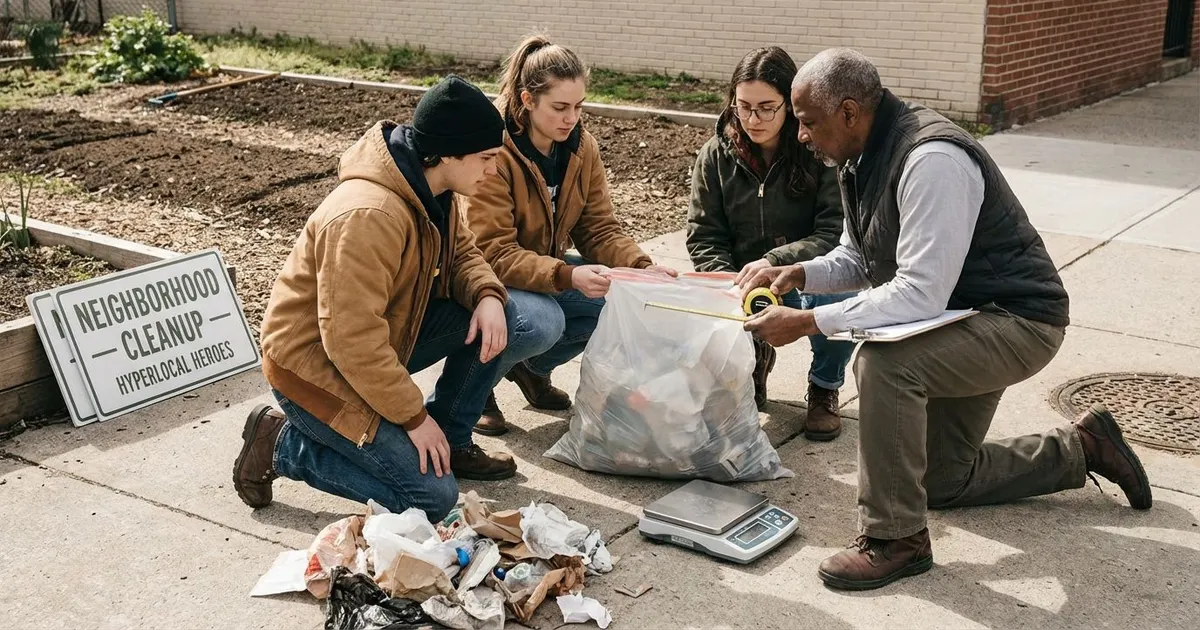
You can drive real change in your own community by choosing one visible problem, securing one decision-making partner, and delivering a measured result within 30–60 days. Hyperlocal student impact wins when the project is small enough to finish, public enough to be noticed, and tracked well enough to earn trust.
This guide shows how to pick the right local issue, earn permission, run a tight pilot, and prove impact with simple metrics that schools, cities, and partners respect. You will also get practical project ideas, permission pathways, and resource shortcuts that reduce planning time and increase follow-through.
How Can Students Make A Real Difference In Their Own Community Without A Big Budget?
You do not need a big budget, you need a tight scope and a clear owner. Start by selecting a problem that is easy to see and easy to verify, then pair it with a local partner that controls access, space, or distribution. Your strongest early advantage is speed: you can organize quickly, recruit peers, and deliver a visible win before interest fades.
Budget usually becomes a blocker only when the plan is oversized. If you keep the first version small, donations, in-kind support, and free community resources cover most needs. Schools can provide meeting space and printing, libraries can host events, and local businesses often sponsor supplies when you present a one-page plan with a short timeline and a clear public benefit.
Design the first run as a pilot with a defined start and end date. A clean-up with a documented before-and-after, a two-week drive with a single distribution partner, or a pop-up tutoring block that has sign-in sheets all qualify as “real difference” because the output is undeniable. Once you can show a result, access gets easier, and recruiting becomes simpler because people join what looks active.
What Are The Best Student-Led Community Project Ideas That Actually Work Locally?
The best projects match a local need with a student advantage: time, social reach, and the ability to mobilize fast. Avoid projects that depend on long approvals or specialized labor for the first run. Choose work that can be completed using basic tools, volunteer hours, and a reliable partner, then build upward after you earn trust.
High-performing hyperlocal categories repeat across schools and youth-service programs: neighborhood cleanups plus waste audits, recycling and e-waste collection, food or hygiene collections with one distribution partner, peer tutoring, book drives aligned to a specific classroom need, and local awareness campaigns tied to an action step. These work because they are easy to explain, easy to staff, and easy to measure in a short time window.
When choosing among ideas, score each option against four filters: visibility, feasibility, measurability, and handoff. Visibility means a neighbor can notice the change without needing a report. Feasibility means your team can deliver with standard supplies and volunteer hours. Measurability means you can count outputs and show a baseline. Handoff means a club, teacher, or partner can continue it after your initial push ends.
If you want a project that gets attention fast, prioritize projects that produce clean visuals and strong counts. Before-and-after photos, piles of collected items, mapped cleanup zones, and simple charts all make the work legible to adults and peers. That “legibility” is what converts a one-time event into ongoing support.
How Do Student Projects Get Permission To Do Things Like Murals, Cleanups, Or Traffic-Safety Changes?
Permission becomes predictable when you separate projects into two tracks: immediate-action work and approval-required work. Immediate-action work includes cleanups, audits, education, collections, and events inside approved spaces. Approval-required work includes painting, signage, permanent placement, and anything that changes public property or school facilities.
For approval-required work, treat your request like a low-risk pilot rather than a permanent commitment. Identify who owns the space, then show a one-page plan that covers purpose, location, timeline, supervision, and safety controls. Include a simple rollback plan when relevant, since decision-makers approve faster when reversibility is clear.
Walk in with evidence, not opinions. Bring photos of the site, a short baseline count if the issue is measurable, and a draft schedule that shows you are organized. Use plain language, avoid long reports, and ask for a specific decision: approval for a limited pilot, permission to recruit volunteers, or authorization to post materials. If the answer is “not yet,” leave with a defined next step and a named point of contact.
Cleanups are often the easiest approval path because they reduce liability when adult supervision is clear and safety rules are documented. For anything on streets, sidewalks, or traffic zones, go through the city or district office and expect a longer lead time. You can still move fast by running the immediate-action track while approvals progress in parallel.
What Are Real Examples Of Hyperlocal Student Impact With Numbers?
Strong examples share two traits: a simple output metric and a clear time window. When you can show “what changed” in a month, adults read your project as credible and repeatable. Numbers also protect your work from being dismissed as a feel-good activity, since counts create accountability.
You can measure impact using straightforward counts: kilograms of e-waste collected, bottles diverted, bags of trash removed, volunteer hours logged, students tutored, or households reached. Youth-led project stories shared by education and innovation organizations often highlight these basic metrics because they travel well across schools and cities. When you present numbers alongside photos, sign-in sheets, and partner confirmation, the project becomes difficult to ignore.
System change is another category of measurable impact, even when numbers are smaller. A school that adds an ongoing drop-off bin, a library that hosts recurring student-led tutoring, or a partner organization that adopts a student-built resource kit is measurable because it persists. Track adoption with a simple “owner and cadence” statement: who maintains it, how often it runs, and how it is replenished or updated.
If you want to stand out, measure both outputs and a light outcome proxy. Outputs prove you worked, outcome proxies suggest the work mattered. Outcome proxies can be as simple as before-and-after spot counts, short participant surveys, or changes in recurring maintenance needs reported by a partner.
How Do Students Measure Impact In A Way Adults Take Seriously?
Adults trust impact when you provide a baseline, a counter, and a timeframe. Baseline means a “before” snapshot that is concrete: litter per block, number of families served by a partner per week, or the number of students needing tutoring slots. Counter means the unit you can count without debate: bags, pounds, sign-ins, items, or verified deliveries. Timeframe means the specific dates you ran the project, not a vague season.
Build a measurement stack that is simple enough to maintain and strong enough to defend. Use three layers: outputs, outcome proxies, and sustainability. Outputs are your hard counts. Outcome proxies are quick indicators that conditions improved, like reduced litter in a target zone two weeks after a cleanup or a basic skills check for tutoring participants. Sustainability is the handoff plan with names, dates, and responsibilities so the work does not vanish after the photo op.
Document the work like a project manager, not like a storyteller. Keep a shared folder with dated photos, partner emails, volunteer rosters, receipts if applicable, and a one-page weekly update. This documentation protects your credibility, helps with school approval, and makes it easy to apply for grants or recognition later.
Keep your reporting tight: one slide or one page can carry the full story when it includes goal, baseline, actions, counts, timeframe, and next steps. When you deliver that format consistently, adults start offering support without being chased. Trust forms when the work looks controlled and repeatable.
Where Can Students Find Grants, Toolkits, Or Organizations That Support Youth-Led Local Change?
You will move faster by borrowing a proven playbook instead of inventing one. National youth-service organizations, structured service campaigns, and school-aligned project toolkits reduce planning time because they already include timelines, checklists, and community partner guidance. Pair those toolkits with a local sponsor who can sign forms, reserve spaces, and validate your work publicly.
Youth-focused action platforms and service networks can also solve a major early-stage problem: knowing what “counts” as a legitimate project. Many provide project categories, role definitions, and ready-made campaign ideas that you can localize to your neighborhood. That structure helps your team avoid drifting into vague goals and gives adults a familiar format to approve.
Funding is often more accessible than expected when your project is well-scoped. Small grants, local business donations, PTA support, and community foundations typically want a clear plan, a short timeline, and measurable outputs. When you can show a completed pilot, even a small one, you become a lower-risk bet for supporters who have been burned by half-finished student projects.
If crowdfunding platforms come up in your search, confirm whether they are currently active and what support they offer beyond fundraising. Some platforms have changed operations over time, so your best move is to focus on stable partners: schools, libraries, local nonprofits, and established youth-service networks that already work with student teams.
What Do Students Say Is The Hardest Part Of Running A Community Service Project?
The most common pain point is not motivation, it is execution. Students often struggle to narrow the project to something finishable, then struggle again to recruit consistently after the first burst of excitement. The typical failure pattern is a broad mission, a loose timeline, and no single owner for approvals, logistics, and partner coordination.
You avoid that pattern by operationalizing your project early. Assign roles that match real work: partner lead, logistics lead, volunteer lead, communications lead, and measurement lead. Keep weekly check-ins short, assign specific deliverables, and track progress in a shared doc with dates. When your team runs on a visible scoreboard, it becomes easier to hold people accountable without creating drama.
Recruiting also breaks down when the “ask” is vague. People join specific actions with fixed times and clear tasks. A well-staffed two-hour cleanup with assigned zones recruits better than an open-ended request to “get involved.” When you control the event format, you reduce volunteer anxiety and raise the show-up rate.
Adult support is another sticking point. Many students assume adults will not help, then stop asking. Your job is to make it easy to say yes by presenting a tidy plan that answers the questions adults always have: safety, supervision, location, timing, and who is accountable.
How Do You Build A Student-Led Hyperlocal Project That Lasts Past One Event?
Longevity comes from ownership and cadence. If the work depends on a single motivated student, it will end when schedules shift. You need a named group that owns the work, a repeating schedule, and a documented process so new students can step in without restarting.
Start by converting the pilot into a repeatable operating plan. Write a one-page “runbook” with the who, what, where, and how: how to contact the partner, how to reserve space, what supplies are needed, how to recruit volunteers, and how to capture metrics. Store it where the next team can access it easily, and keep it updated after each run.
Then formalize handoff. Tie the project to a club, a class, or a service-learning requirement so it has institutional support. If the project sits outside any existing structure, it will fight for oxygen against sports, exams, and school events. When it becomes part of a predictable calendar, it will survive leadership changes.
Adults and partners stay engaged when they see consistency. A small, reliable monthly action beats a huge annual event that burns people out. If you want real staying power, keep the project simple, keep the reporting clean, and keep the cadence steady.
How Do Students Start A Community Project Fast?
- Pick 1 issue, 1 partner, 1 metric
- Run a 30–60 day pilot
- Track baseline + counts + photos
- Publish results, then repeat
Make Your Neighborhood The Place Your Leadership Shows Up
Hyperlocal impact happens when you treat a student project like real operations: a tight scope, a clear partner, a measured pilot, and a documented handoff. You will earn faster approvals when your request is small, your safety plan is clear, and your timeline is short. You will recruit more volunteers when the ask is specific and the tasks are defined. You will keep adult support when you publish clean numbers and show repeatability. If you want to be taken seriously, ship a modest win quickly, then upgrade the project using what you learned and what your community actually responds to.
References
- Pingback: 7 SEO Tips to Rank in Google’s People Also Ask
- DoSomething.org
- Good News Good Planet Schools: Service-Learning Projects
- Transform Educational Consulting: Student-Led Community Projects (Medford)
- HundrED: Youth-Led Social Impact Projects
- arXiv: Iterative Service-Learning (2406.15679)
- arXiv: Community-Based Environmental & Data Literacy (2309.14098)
- ioby.