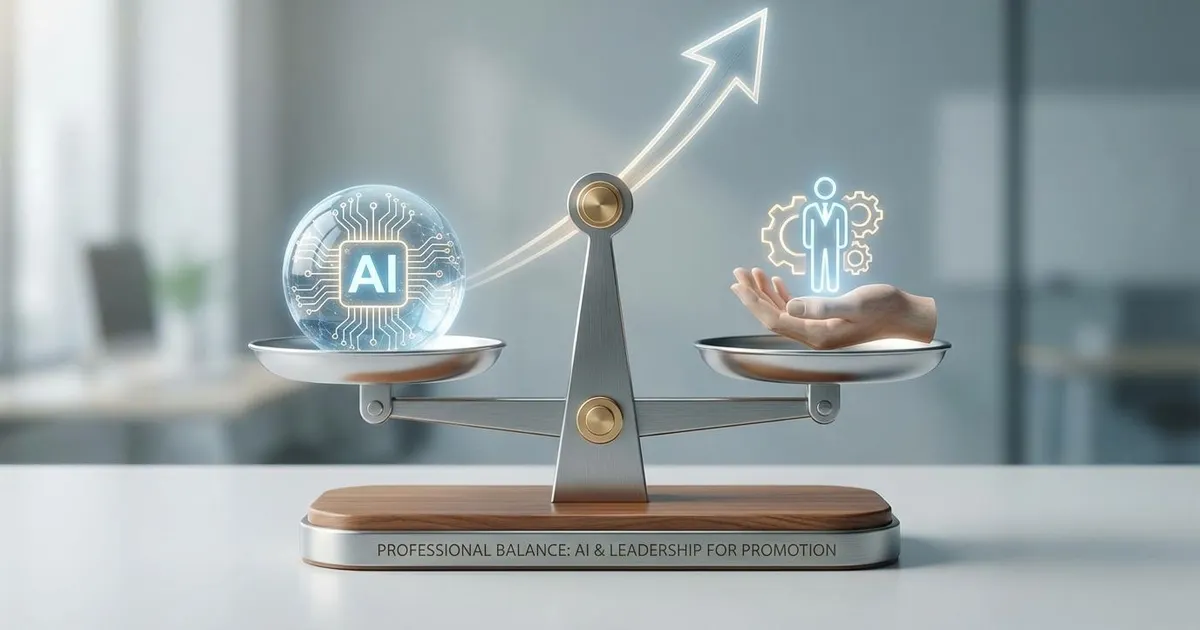
AI skills can help you get noticed, hired, and trusted with more technical scope. Soft skills are what usually move you into promotion territory, because promotions are decisions about trust, influence, judgment, and your ability to make other people more effective.
If you want to become more promotable, you need a sharper understanding of how managers actually evaluate readiness for the next level. This article breaks down where Artificial Intelligence (AI) skills matter, where human skills still carry the most weight, and what you can do to build both in a way that changes how your work is seen. You will leave with a practical way to think about communication, leadership, adaptability, and AI fluency as one career system rather than two competing priorities.
Will AI Skills Get You Promoted, Or Do Soft Skills Still Matter More?
AI skills matter because they signal relevance. If you can use AI tools to draft faster, analyze faster, summarize faster, and reduce manual work, you become more useful in a workplace that expects speed and efficiency. Employers are paying attention to that. Research on hiring has shown that AI-related skills can improve job prospects and strengthen how candidates are evaluated, which means AI fluency is no longer a niche bonus on a resume. It is becoming part of the baseline for modern professional credibility.
Promotion, though, is not the same decision as hiring. Hiring often asks whether you can do the work. Promotion asks whether you can handle greater responsibility, represent the team well, make sound decisions under pressure, and create better results through other people. That is why soft skills continue to dominate promotion conversations. A manager can teach a capable employee a new workflow or a new tool. It is much harder to teach judgment, credibility, communication discipline, emotional control, and the ability to reduce tension in a room when stakes are high.
You should treat AI skills as force multipliers, not as substitutes for promotability. A person who uses AI well can produce more output. A person who uses AI well and also communicates clearly can drive decisions. A person who uses AI well, communicates clearly, manages conflict, and earns trust can lead. Promotion tends to follow that progression. The farther you move up, the less your value comes from isolated execution and the more it comes from coordination, clarity, and confidence under ambiguity.
This is where many strong performers get confused. They assume better output will naturally lead to upward mobility. Sometimes it does, especially early in a career. Past a certain level, stronger output without stronger interpersonal range can cap your advancement. If your manager cannot picture you calming a tense meeting, aligning different functions, defending a recommendation, coaching a teammate, or representing the team to senior leadership, you may be seen as valuable but not yet promotable.
The practical takeaway is simple. You do not need to choose between AI and soft skills. You need enough AI skill to stay current and enough human skill to be trusted with larger decisions. That blend is what gets noticed in promotion reviews, talent planning discussions, succession conversations, and leadership pipelines.
What Soft Skills Actually Make You More Promotable In The Age Of AI?
The most promotable soft skills are not vague personality traits. They are observable behaviors that make your work easier to trust and easier to scale. Communication sits near the top because every role with more responsibility demands more explanation, more alignment, and more visibility. If you can explain tradeoffs, tailor a message to different audiences, keep updates crisp, and prevent confusion before it spreads, your impact rises beyond your individual output.
Judgment is another major differentiator. AI can produce options fast, but it does not own the consequences of a poor decision. Your promotability rises when you show that you can evaluate risks, separate signal from noise, challenge weak recommendations, and make decisions that hold up after scrutiny. Managers pay close attention to this because leadership roles bring more ambiguity, more incomplete information, and more second-order effects. Technical talent gets attention. Judgment gets trust.
Adaptability also matters more than many professionals realize. When tools, workflows, and expectations shift, promotable employees do not stall, complain, or wait for perfect clarity. They recalibrate quickly, learn the new system, and help others move with less friction. Organizations reward people who absorb change without becoming chaotic. If AI is changing how work gets done, the people who advance are often the ones who can absorb that change, stabilize the team, and convert uncertainty into a working plan.
Collaboration is another skill that often gets underestimated. You may be brilliant at solo execution and still hit a ceiling if peers find you difficult to work with or hard to read. Promotion decisions often include informal input from across the organization. Your reputation for reliability, responsiveness, clarity, and calm problem-solving shapes how leaders see your readiness. A person who consistently reduces friction becomes easier to back for broader responsibility.
Leadership, even before you hold a formal management title, rounds out the list. This means taking ownership, raising standards, mentoring peers, surfacing issues early, and helping a team move forward without waiting for instructions on every step. AI can support your work. It cannot create trust around your name. If people associate you with good judgment, good communication, and steady execution, you become a safer promotion decision.
You should also notice what is missing from this list. Charisma is not the requirement. Loudness is not the requirement. Constant visibility is not the requirement. Promotable soft skills are often quieter and more disciplined than people expect. Clear updates, thoughtful decisions, calm feedback, consistent ownership, and reliable follow-through often matter more than polished performance.
Why Do Managers Keep Saying You Need Better Communication To Get Promoted?
Managers say this because communication is usually the first visible sign that you can operate at a higher level. When leaders evaluate promotion readiness, they are not just asking whether you know your job. They are asking whether your impact can travel across the team, across functions, and upward into more strategic conversations. Communication is the vehicle for that movement. If your ideas stay trapped in your own head or your own workstream, your scope remains limited even when your ability is strong.
This feedback frustrates many professionals because it often sounds vague. “Improve communication” can feel unhelpful when you are already doing the work well. The missing piece is that managers usually mean several different things at once. They may mean your updates are too detailed, too late, too reactive, too technical for the audience, or too unclear about risks and decisions. They may mean you are not visible enough in meetings, not direct enough in conflict, or not effective at adjusting your message for senior leaders versus peers.
If you want to turn that feedback into action, you need to break communication into sub-skills. One part is written clarity. Can you summarize a complicated issue in a few clean sentences, identify what matters, and point to the decision needed? Another part is verbal precision. Can you speak concisely, avoid rambling, and make a point without sounding defensive? Another part is stakeholder translation. Can you explain technical work in business terms, or business priorities in operational terms, depending on who is listening?
There is also a political side to communication that many employees ignore until it starts limiting them. Promotion often depends on whether decision-makers feel informed, confident, and aligned around your work. If your updates create uncertainty, if your tone makes collaboration harder, or if your messages raise more questions than they answer, your manager ends up spending extra energy managing the effects. Leaders tend to promote people who reduce that burden, not people who add to it.
You can improve this skill faster than you may think. Start by tightening every update. Lead with the point, not the backstory. State the issue, the implication, the recommendation, and the support needed. In meetings, speak early with one useful point instead of waiting for the perfect moment. In feedback conversations, keep your language direct and specific rather than emotional or abstract. Communication improves when you practice structure, brevity, and audience awareness repeatedly, not when you simply “become better with people.”
If your manager keeps raising communication, ask for behavioral examples. Ask which moments are weakening your promotion case. Ask whether the issue is executive presence, written clarity, cross-functional work, conflict handling, or meeting leadership. Once the feedback gets concrete, you can build against it. Until then, you are trying to solve a blurry problem, and blurry problems rarely get fixed.
Can AI Replace The Soft Skills Needed For Leadership And Promotion?
AI can support leadership tasks, but it cannot replace the human qualities that make leaders promotable. It can help you draft talking points, summarize meetings, organize decisions, prepare for difficult conversations, and identify patterns in information. Those are useful advantages. They save time and improve preparation. Yet preparation is not the same thing as leadership.
Leadership requires credibility. It requires the ability to make a decision when data is incomplete, absorb accountability when outcomes are mixed, and communicate in a way that steadies other people. AI cannot own your judgment. It cannot carry your reputation. It cannot step into a tense room and rebuild trust after a bad call. When promotion decisions involve management potential, cross-functional leadership, or strategic ownership, these limits matter a great deal.
You also need to consider how organizations make bets on people. A promotion is often an act of risk management. The company is giving you more authority, more visibility, and more influence over outcomes that affect others. Leaders want signs that you can handle complexity without creating confusion, pressure without becoming erratic, and disagreement without damaging relationships. AI may help you gather options faster, but the final evaluation still rests on your conduct and your consistency.
This matters even more as AI becomes common. When many employees have access to the same tools, tool access stops being a differentiator by itself. Your advantage then shifts to how you use those tools inside real organizational conditions. Can you identify where AI output is weak, misleading, or incomplete? Can you explain those limitations to non-technical stakeholders without sounding alarmist? Can you use AI to support better decisions without letting it weaken critical thinking? Those are human leadership moves, not software features.
There is also a trust issue. Teams do not follow a person simply because that person is efficient. They follow people who are consistent, fair, accountable, and clear under pressure. If your communication feels unstable, if your decisions feel impulsive, or if people are unsure how you will respond when work goes sideways, no amount of AI fluency will compensate for that gap. Promotions are often granted to the person others feel safe relying on when stakes rise.
You should use AI as support infrastructure for leadership, not as a replacement for it. Use it to improve preparation, sharpen your writing, organize information, and surface blind spots. Then do the work only humans can do well: make the call, own the outcome, explain the reasoning, handle the reactions, and keep the team moving.
If AI Handles More Technical Work, What Will Employers Promote You For?
As AI takes over more routine production work, employers promote people for orchestration. That means setting direction, aligning contributors, evaluating tradeoffs, and turning output into business progress. Technical execution still matters, but the premium shifts toward coordination and decision quality. If software can help produce the draft, the spreadsheet, the summary, or the initial analysis, your value rises when you can judge what matters and move the work through the organization effectively.
You can see this shift in how high-level roles already operate. Senior people do not spend most of their time generating raw output. They spend their time clarifying priorities, resolving ambiguity, making decisions with imperfect data, negotiating tradeoffs, and helping teams execute in the same direction. AI compresses some of the production layer beneath that work, which places more emphasis on the human tasks above it. That is why promotability increasingly depends on whether you can direct work, not just complete work.
This is also why many technically strong employees feel stuck. They continue optimizing for individual throughput when the organization is rewarding leverage. If you produce ten polished deliverables with AI support, you are useful. If you use AI to speed the work, identify the real issue, align stakeholders, and unblock three other people, you become much harder to ignore. Promotion often follows that second pattern because it shows scalable value rather than isolated productivity.
Employers also promote people who can help teams adopt AI sensibly. That means identifying workflows worth automating, setting quality checks, protecting decision quality, and avoiding bad shortcuts. A person who brings AI into a team without creating confusion, dependency, or quality decline becomes strategically useful. This is one of the strongest modern combinations: operational improvement plus strong people judgment. It signals that you can carry change without damaging trust.
You should think of promotability as the ability to multiply output beyond your own hands. The more AI lowers the cost of basic execution, the more leadership value shifts toward interpretation, prioritization, coaching, and alignment. If you can turn faster tools into better team outcomes, you are operating at a higher level than someone who simply uses those tools for personal speed.
This is why promotion committees often ask versions of the same question, even if they phrase it differently: does this person make the team stronger, calmer, clearer, and more effective? AI can help you contribute to that answer. It cannot answer it for you.
Are Soft Skills Just A Vague Excuse, Or Do They Really Affect Promotions?
Soft skills affect promotions in very real ways, but companies often explain them badly. That is why employees sometimes experience them as code words, moving goalposts, or fuzzy standards. When a manager says you need stronger executive presence, better communication, or more leadership, the statement can feel subjective unless it is tied to specific behaviors. The frustration is understandable. Vague feedback is hard to act on and easy to resent.
Still, the existence of poor feedback does not mean the underlying issue is fake. Organizations promote people based on trust, readiness, reputation, and the ability to operate with less supervision at a larger scope. Those judgments are shaped by behavior that does not show up neatly in a technical test. How you handle disagreement, how you speak in meetings, how you recover from mistakes, how well you coach others, how you escalate issues, and how consistently you close loops all feed into promotion decisions.
The best way to make soft skills usable is to convert them into visible patterns. Communication becomes crisp written updates, strong listening, concise explanations, and clear asks. Collaboration becomes responsiveness, low-friction teamwork, and the ability to resolve conflict without drama. Leadership becomes ownership, initiative, mentoring, and decision-making under ambiguity. When you define soft skills this way, they stop sounding abstract and start looking like measurable workplace behavior.
You should also recognize that many promotion discussions happen when you are not in the room. Leaders compare notes. Peers mention who is easy to partner with. Managers remember who needed constant translation and who made difficult work easier to move. If your reputation is uneven, technical strength may keep you valued but not advanced. If your reputation is strong, your case becomes easier to support even when competition is tight.
This is where AI adds an interesting twist. As more technical tasks become faster and more standardized, the relative value of interpersonal reliability rises. The person who can keep a team coordinated, keep communication clean, and keep decision quality high becomes more important, not less. Soft skills do not disappear when technology improves. Their business value becomes easier to see.
If your company uses soft skills language loosely, push for precision. Ask what behaviors define readiness at the next level. Ask what top performers do differently in communication, leadership, and cross-functional work. Ask which behaviors are helping your case and which are weakening it. That turns a frustrating label into a workable development plan.
What Is The Best Career Strategy Now: Build AI Skills First Or Soft Skills First?
The strongest strategy is to build enough AI capability to stay relevant and enough soft skill strength to become promotable. You do not need deep technical mastery of every emerging tool. You do need working fluency. You should understand how AI can support research, writing, synthesis, planning, analysis, and workflow improvement inside your role. If you cannot use these tools with competence, you risk looking outdated or inefficient compared with peers who can.
That said, AI fluency alone will not carry you far if your communication is weak, your judgment is inconsistent, or your collaboration creates friction. Career growth usually accelerates when your technical range and your interpersonal range rise together. A promotable employee can use AI to move faster and still protect quality, explain tradeoffs, and earn support from others. That combination makes your work more visible and your readiness easier to defend.
If your time is limited, sequence your development in a practical order. Build enough AI skill to remove obvious inefficiencies in your day-to-day work. Learn the tools that map directly to your role and produce visible gains. Then invest hard in communication, stakeholder management, and decision quality because those skills convert efficiency into career movement. Speed without influence has a ceiling. Speed with credibility scales.
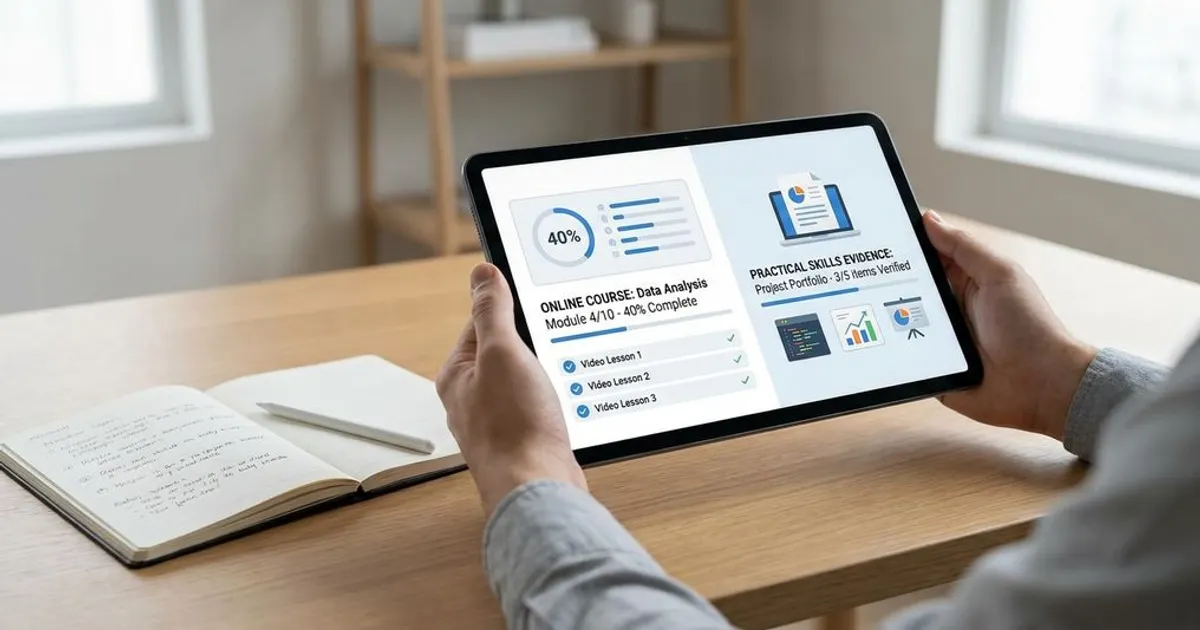
You should also build a portfolio of evidence, not just skills. Promotion cases are stronger when you can point to moments where you improved a process using AI, clarified a messy issue, aligned a cross-functional group, mentored a peer, or handled a difficult conversation well. Managers do not promote theoretical potential. They promote demonstrated readiness. Your goal is to create repeated proof that you can perform at the next level before the title arrives.
There is another reason to treat this as a combined strategy. AI changes fast. A tool advantage can narrow quickly when everyone gets access to similar systems. Human reliability compounds more slowly, but it also lasts longer. If people trust your judgment, value your communication, and know you can lead through change, your career becomes more durable across shifting technology cycles.
The smartest move is not to ask which side wins. The smarter move is to build a reputation for using AI well without outsourcing your thinking, your judgment, or your leadership. That reputation is what turns capability into promotability.
How Do You Actually Improve The Skills That Make You Promotable?
Improvement starts when you stop treating promotability as a mystery. You need a scorecard built around visible behaviors. Start with communication, judgment, collaboration, adaptability, and leadership. Under each category, define a small set of actions you can practice weekly. Communication might include writing shorter updates, leading with the recommendation, and speaking once in every key meeting. Judgment might include stating tradeoffs clearly and identifying risks before someone else has to ask. Collaboration might include faster follow-up, clearer ownership, and fewer unresolved tensions.
Then build a feedback loop that gives you usable signals. Do not ask broad questions like whether you are doing well. Ask what one behavior is increasing confidence in your readiness and what one behavior is slowing it down. Ask peers whether your updates are easy to act on. Ask your manager whether your recommendations are getting sharper. Ask whether your meeting contributions are clear, concise, and aligned with the audience. Specific input creates faster improvement than generic encouragement.
You should also rehearse higher-level work before the title comes. Use AI to help prepare for that rehearsal. Draft executive summaries. Turn project notes into short recommendation memos. Prepare talking points for difficult conversations. Simulate likely objections before a stakeholder meeting. AI is useful here because it can reduce the friction of practice, but the important part is that you are practicing promotable behavior, not just polishing output.
Another effective move is to own one problem that crosses team boundaries. Promotions often go to people who can handle ambiguity and coordination. If you can step into a messy workflow, bring structure to it, keep people aligned, and move it toward a decision, you create visible proof of readiness. This kind of work is demanding, but it also teaches the exact skills that promotion panels value most.
Do not ignore tone and consistency. Many professionals know what good communication looks like on their best days. The question is whether they can deliver it under pressure, under deadlines, and during disagreement. Promotability depends less on occasional brilliance and more on stable performance when conditions are imperfect. That is why discipline matters. Tight writing, clean follow-through, calm escalation, and steady ownership build trust over time.
You should measure progress in terms your manager will recognize. Are projects moving with less friction when you lead them? Are your updates creating fewer follow-up questions? Are stakeholders asking for your input earlier? Are peers relying on you to clarify decisions? Are you being given more visible work without asking for it? Those are signals that your promotability is rising, even before a formal promotion discussion begins.
What Truly Makes You Promotable In The Age Of AI?
- Use AI well to improve speed, quality, and workflow efficiency.
- Communicate clearly so leaders trust your judgment and direction.
- Show leadership behaviors through ownership, collaboration, and decision-making.
- Make other people more effective, not just your own output stronger.
Build The Reputation That Earns The Next Role
Your promotion path is not decided by AI skills alone or by soft skills in isolation. It is shaped by whether you can combine technical relevance with human reliability in a way that makes greater responsibility feel safe, useful, and overdue. If you use AI to improve execution but still communicate poorly, your growth can stall. If you communicate well but avoid modern tools, your relevance can fade. The strongest position is the one where you operate with current tools, strong judgment, clear communication, and visible ownership. That is what makes leaders trust you with broader scope, and that trust is what promotions are built on.
References
- AI Skills Improve Job Prospects: Causal Evidence from a Hiring Experiment
- LinkedIn Workplace Learning Report
- World Economic Forum Future of Jobs Report
- Association for Computing Machinery CareerNews
- Society for Human Resource Management Research on Leadership, Culture, and AI
- PricewaterhouseCoopers Global Workforce Hopes and Fears Survey
- LinkedIn Economic Graph on Soft Skills and Promotion
- Reddit Career Guidance Discussion on Communication Skills and Promotion
- Reddit Experienced Developers Discussion on Soft Skills
- Reddit Managers Discussion on Management and Soft Skills