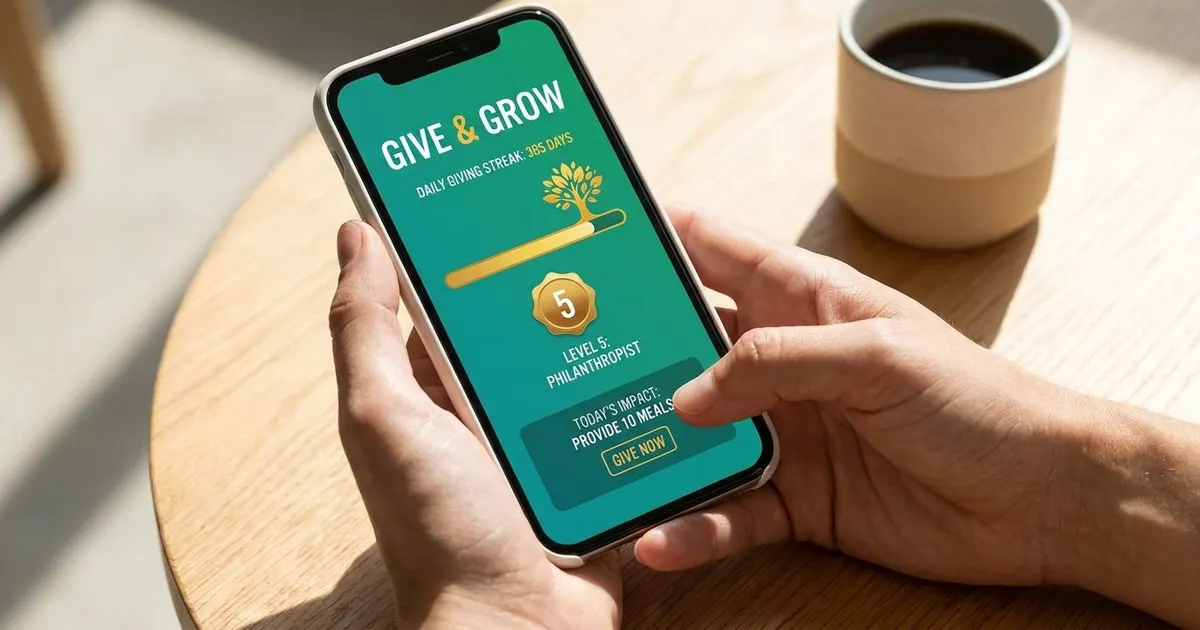
Gamified charity apps turn ordinary behavior into repeatable giving by attaching donations to taps, quizzes, steps, miles, and browser activity. When you pick the right tool, generosity stops feeling like a separate task and starts working like part of your daily routine.
You are not looking for abstract theory here. You want to know which apps matter, how they actually fund causes, whether they make a real difference, and which ones fit the habits you already have. This guide gives you that practical view, with clear recommendations, real product details, and a sharper way to evaluate daily giving tools before you install them.
What Are The Best Apps That Make Charity A Daily Habit?
If your goal is to make giving repeatable, a small group of products stands out right away: ShareTheMeal, Freerice, Charity Miles, Tab for a Cause, and Treekly. These are not interchangeable tools. Each one is built around a different daily action, which is why they work for different kinds of users and different attention spans.
ShareTheMeal is the cleanest choice when you want direct giving with minimal friction. You open the app, choose a cause, fund meals, and see visible impact totals that reinforce the habit. It has also built meaningful scale, reporting hundreds of millions of meals shared, a large supporter base, and many completed goals, which gives you a stronger signal than a clever concept with weak follow-through.
Freerice works from a different angle. It turns a quiz into sponsored giving, which means your correct answers trigger rice donations through funding tied to the program. That makes it useful for people who like learning, classroom-style competition, or productive downtime that still feels purposeful.
Charity Miles and Treekly target movement. If you already walk, run, or track steps, these apps convert physical activity into sponsor-backed or goal-based impact. That matters because exercise is already repetitive by nature, and repetition is what turns one charitable action into a habit.
Tab for a Cause fits the passive giver better than the active donor. If you spend a large share of the day inside a browser, a replacement new-tab page with ads that generate money for charity can make sense. It requires very little behavior change, which is often the deciding factor in whether a giving tool survives longer than a week on your devices.
From an execution standpoint, that range is the story. The best app is not the one with the most emotional branding. It is the one that connects to something you already do every day, then adds just enough reward, visibility, and ease to keep you coming back.
How Do Charity Apps Actually Turn Everyday Actions Into Donations?
Most charity apps use one of four funding models: direct donations from users, ad-supported revenue, sponsor-funded activity, or subscription and goal-based support. The game mechanics sit on top of that business model. Points, streaks, totals, and visual progress are there to keep you engaged, but the money has to come from somewhere concrete.
ShareTheMeal is direct and easy to understand. You donate your own money, either as a one-time gift or as an ongoing monthly contribution, and the app routes support to hunger-related campaigns through the World Food Programme. The appeal is speed and clarity. A user can act in seconds, and the app shows the connection between money sent and meals funded in a way that feels immediate rather than buried under forms and friction.
Freerice uses sponsor-backed funding tied to quiz participation. You answer questions, the grain count rises, and the World Food Programme receives funding connected to that activity. The user is not paying out of pocket with each answer, which is why the app feels accessible and low-pressure, especially for students and casual users.
Charity Miles relies on sponsors and movement tracking. Walking, running, and biking become measurable inputs, and those inputs can translate into donations through company support, employer programs, and activity-based campaigns. That structure makes the app less about donating in the traditional sense and more about converting wellness behavior into funding.
Tab for a Cause uses ads on the new-tab page to generate revenue, then directs a share of that revenue toward nonprofits. This is where many readers get skeptical, and for good reason. Free giving tools can sound vague until you understand that the product is monetizing attention, not inventing value. You are effectively trading a slice of your browsing real estate for charitable support.
Treekly adds one more model: goal thresholds and optional subscription support. The user’s daily step target drives tree-planting outcomes, and paid upgrades can increase the level of funded impact. That makes the app part habit tracker, part environmental giving tool, and part subscription product. If you want to judge these apps accurately, that funding structure matters more than the slogans on the download page.
Do Gamified Giving Apps Really Help Charities, Or Are They Mostly Feel-Good Tools?
They help most when they increase frequency, retention, and total participation over time. A single quiz answer, a single walk, or a single browser tab is not a major financial event. The strength of gamified giving sits in repeated use, low-friction engagement, and the ability to keep generosity active without requiring a fresh emotional decision every day.
That distinction matters. Many users expect these apps to replace traditional donations, major campaigns, or long-term fundraising programs. They do not. What they can do very well is create an entry point, reinforce a daily ritual, and keep a cause visible in your routine. That is valuable because most people do not stop caring about charities; they stop acting because giving falls out of view.
Recurring donor research supports this pattern. Smaller, predictable contributions are easier for many people to sustain, and ongoing support often feels more meaningful than a single larger gift made once and then forgotten. Gamified tools align with that behavior by reducing the emotional weight and practical effort required to act again tomorrow.
The strongest apps also show visible proof of progress. ShareTheMeal displays meals shared and supporter counts. Freerice keeps the grain mechanic front and center. Treekly links step targets to trees funded. Tab for a Cause turns a passive digital action into a visible tally. Those loops matter because visible impact keeps the habit alive longer than guilt, obligation, or pure novelty.
There is a limit, and it should not be ignored. Some products make tiny units of impact feel larger than they are. That does not make them deceptive by default, but it does mean you should separate habit-building value from fundraising scale. Used well, these apps can make you more consistent, more aware, and more likely to give. Used carelessly, they can leave you with the impression that a symbolic action equals sustained support when the economics are much smaller.
The practical reading is simple: a gamified app is strongest as a daily giving engine, a behavioral nudge, and a bridge to larger commitment. You will get the most value when you treat it as infrastructure for consistency, not as a substitute for every other form of charitable support.
Which Apps Are Best For Walking, Quizzes, Browser Use, Or Micro-Donations?
If you want a direct match between habit and app, the selection becomes easier. ShareTheMeal is the strongest pick for micro-donations. Freerice owns the quiz category. Charity Miles and Treekly are the clear choices for movement-based giving. Tab for a Cause remains one of the easiest browser-based options for passive, low-effort support.
ShareTheMeal works well when you want control. You decide when to donate, where the support goes, and whether the gift is one-time or recurring. The app’s strongest advantage is clarity. You are not guessing whether a sponsor, advertiser, or partner will eventually convert your activity into value. You are sending money directly through a clean user flow.
Freerice is the better fit if you want giving without a payment decision every time you engage. The quiz mechanic creates its own pull. You answer a question, get instant feedback, keep the streak going, and generate sponsor-backed support as you continue. It also fits educational settings more naturally than the other apps in this category, making it useful for students, teachers, and users who like mentally active forms of participation.
Charity Miles is the stronger name if you already run, walk, or bike and want those actions measured into charitable value. Treekly is the better fit if you like step targets and environmental goals with a visible threshold, especially if tree planting resonates more than a broad charity directory. Their audiences overlap, but the motivation is not identical. One leans into movement sponsorship. The other leans into step discipline and a simpler environmental reward loop.
Tab for a Cause deserves attention because passive tools are often the ones users keep longest. You do not need to remember a donation flow or launch a workout. You just keep browsing. If your workday lives in a browser, that low-friction design can outperform more ambitious apps that ask for fresh effort every session.
The useful filter is not which app sounds noble. It is which app maps to something you already repeat without resistance. Match the tool to an existing behavior and you raise the odds that giving becomes automatic instead of aspirational.
Are Charity Apps Free, And What Is The Catch With Ads, Sponsors, Or Subscriptions?
Some are free to use, some require your own donation money, and some mix free participation with sponsors, ads, or paid upgrades. The catch is rarely hidden if you read carefully. The real issue is that many users never pause to ask how value is created, who funds it, and what share reaches the cause.
Freerice is free for the user. The money comes through sponsor-backed support tied to gameplay and engagement. That model is simple enough once you understand it, but many people still assume a correct answer magically creates financial value on its own. It does not. A business or funding partner is behind that chain.
Tab for a Cause is also free in the sense that you are not donating your own money when you open a tab. The product monetizes ad inventory on the new-tab page, then directs part of the resulting revenue to charities. That can be useful, but it also means ad blockers, low engagement, and platform economics affect the amount raised. You should treat that as an ad-supported charity mechanism, not as free money appearing from routine web use.
ShareTheMeal sits at the opposite end. It is not free giving. It is streamlined giving. You are the funder, and the app removes barriers that usually slow down small donations. That distinction matters because the value proposition is stronger if you want certainty and weaker if you are trying to give without opening your wallet.
Treekly introduces a hybrid model. There is a free tier tied to step-based goals, and there is also a paid option that increases the level of support tied to your activity. For users who like environmental giving and quantified progress, that can work well. For users who only want no-cost participation, it changes the decision because your impact ceiling may depend on whether you upgrade.
If you want to evaluate the catch correctly, look at four things: who pays, what action triggers value, how clearly the app explains the flow of funds, and whether the habit remains useful after the novelty fades. When those answers are clear, the business model stops feeling suspicious and starts functioning like a practical part of your decision.
What Do Real Users Say About Using Gamified Charity Apps Every Day?
User sentiment usually turns on one issue: does the app fit into routine without creating friction. People are open to gamified charity tools when the product works quietly in the background or rewards an existing habit they already value. They lose patience fast when tracking breaks, sign-ins fail, or the math behind the impact feels vague.
That pattern shows up especially well around browser-based tools like Tab for a Cause. Users who already open a large number of tabs tend to like the idea of passive impact. They do not need a separate act of will each day, and the tool asks for very little attention. But that same audience notices reliability problems immediately because a browser habit is constant. Small interruptions feel larger when they happen inside a workflow you repeat dozens of times.
Movement-based apps get a similar split. Users like the added motivation that comes from linking exercise to a cause. It makes a walk feel more purposeful and gives another reason to maintain consistency. But movement apps are only as good as their tracking, battery behavior, device compatibility, and sync performance. Once users doubt the count, they start doubting the value.
Quiz-based giving tends to earn goodwill when it stays simple. Freerice benefits from the fact that the core action is easy to understand and instantly rewarding. You answer, you score, the rice count rises. There is less room for confusion than in ad-driven or movement-tracked models, where the relationship between behavior and actual funding can feel more indirect.
Direct donation apps generate a different kind of trust. ShareTheMeal does not have to persuade users that a sponsor or advertiser will handle the economics correctly. The user already knows money is moving directly. That tends to lower skepticism and shift attention toward ease of use, campaign choice, and the emotional payoff of visible progress.
If you read user reactions with discipline, one principle keeps surfacing: a charity app survives when it removes effort, shows impact, and stays dependable. If it adds friction, creates doubt, or asks the user to decode the funding logic, adoption slows and habit formation usually stops.
What Makes People Stick With A Giving App Long Enough For It To Become A Habit?
Retention in charitable apps follows the same laws as retention in health, productivity, and finance tools. You need low friction, a visible reward loop, credible impact, and a commitment level that feels sustainable. Miss one of those elements and the app can still get downloaded, but it usually will not become part of your life.
Low friction comes first. If you need too many taps, too many settings, or too many explanations every time you open the app, daily use erodes fast. ShareTheMeal handles this well because the donation path is short and easy to repeat. Tab for a Cause handles it well in a different way by embedding itself into a behavior you were already going to perform.
Visible reward keeps the habit alive. People do not need fireworks, but they do need proof that today’s action mattered. Meal totals, rice counts, tree milestones, step targets, and raised amounts all serve the same purpose. They convert an invisible charitable outcome into something immediate enough to reinforce behavior before attention moves elsewhere.
Credible impact matters more than many product teams admit. If users suspect the app is vague about where funds go, how ads convert to money, or how sponsors are involved, trust weakens. Strong products explain the economics clearly enough that you do not need to guess. That clarity is one reason some direct-giving tools keep momentum more easily than passive models with more moving parts.
Sustainable commitment is what turns interest into routine. Small donations, short quiz sessions, browser-based actions, and achievable step goals all work because they stay within the user’s normal energy budget. Once the commitment feels too large, the app starts competing with everything else in the day, and habit formation usually loses.
The products that last are the ones that treat generosity like a repeatable operation instead of a rare emotional event. If you want an app to stick, pick one with a trigger you already perform, an impact signal you can see instantly, and a cost structure you can sustain without thinking twice every morning.
How Should You Choose The Right Charity App For Your Daily Routine?
Start with your strongest existing habit, not your best intentions. If you already donate money and want a cleaner way to do it more often, ShareTheMeal makes the most sense. If you spend downtime answering trivia or educational prompts, Freerice is the easier fit. If your routine already includes walking, running, or step tracking, Charity Miles or Treekly will align faster.
Then look at your tolerance for indirect funding models. Some users are comfortable with ads and sponsor-backed economics. Others want direct certainty and do not want to think about revenue shares, partner support, or tracking thresholds. That preference should shape your choice early, because trust determines whether the app becomes part of your routine or gets deleted after a few sessions.
You should also define what success means before you install anything. If success means giving a little every day with minimal effort, browser-based and quiz-based tools can work well. If success means building a monthly financial habit, direct donation apps are stronger. If success means linking wellness goals to social good, movement apps will feel more natural and rewarding.
Do not ignore interface discipline. The best mission in the world will not save a clumsy product. You need fast onboarding, clear prompts, dependable tracking, and a visible sense of momentum. Habit tools win on repetition, and repetition punishes weak design faster than almost any other usage pattern.
A smart selection process is simple: match the app to the habit you already own, verify how money reaches the cause, confirm that the reward loop feels motivating, and choose a level of commitment you can keep for months. That is how giving shifts from occasional intent to everyday behavior.
Which Charity App Type Fits You Best?
- Direct Giving: Best if you want control and clear funding flow
- Quiz-Based Giving: Best if you want daily engagement without paying each time
- Movement-Based Giving: Best if you already track walks, runs, or steps
- Browser-Based Giving: Best if you want passive support during work or browsing
Turn Small Actions Into A Giving System
The real value of gamified charity apps is not novelty. It is consistency. When you choose a tool that fits your actual behavior, you remove friction, keep impact visible, and make generosity easier to repeat without extra planning. ShareTheMeal, Freerice, Charity Miles, Tab for a Cause, and Treekly each solve that problem in a different way, which is why the best choice depends on whether your daily trigger is money, knowledge, movement, or browser time. If you want daily giving to last, select the app that matches your routine, verify the economics behind it, and keep the habit simple enough to maintain.
References
- https://sharethemeal.org/en-us/
- https://sharethemeal.org/about
- https://sharethemeal.org/en-us/faq
- https://sharethemeal.org/en-us/donate-monthly
- https://freerice.com/frequently-asked-questions
- https://charitymiles.org/faq/
- https://www.treekly.org/for-individuals
- https://chromewebstore.google.com/detail/tab-for-a-cause/gibkoahgjfhphbmeiphbcnhehbfdlcgo
- https://www.classy.org/blog/recurring-giving-program-types/
- https://help.ahrefs.com/en/articles/5299602-monthly-search-volume-vs-average-search-volume
- https://www.reddit.com/r/nerdfighters/comments/1s3snee/anyone_still_use_tabs_for_a_cause/
- https://www.reddit.com/r/ADHD/comments/gm80nr